Christmas Cute Girl Snowman: A Designer's Review
When evaluating digital assets for holiday production, the balance between whimsy and technical viability is everything. As a designer who regularly prepares custom apparel and boutique merchandise, I approach every new graphic with a critical eye toward how it will actually stitch out on fabric. The Christmas Cute Girl Snowman design immediately catches attention for its playful character and seasonal charm, but my primary concern is always translation from screen to textile. This review breaks down how this specific graphic performs in real-world embroidery scenarios, helping fellow makers and shop owners determine if it is the right fit for their upcoming holiday collections.
First Impressions and Visual Personality
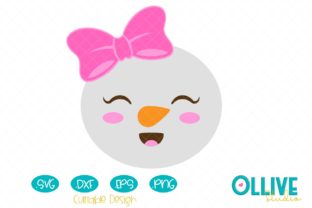
Upon opening the zip folder containing the SVG, EPS, DXF, and PNG formats, the first thing that stands out is the distinct personality of the illustration. Unlike generic snowman clip art, the Christmas Cute Girl Snowman carries a specific narrative mood through feminine details like eyelashes, a bow, or softer facial features. This level of characterization is crucial for personalized gifts and niche marketing. For an Etsy seller or small business owner, this specificity helps target customers looking for gender-specific holiday decor rather than unisex winter themes.
The layout appears balanced for center-chest placement on sweatshirts or as a focal point on tote bags. However, visual appeal on a monitor does not guarantee stitching clarity. When assessing this as a potential machine embroidery design, I look for clean vector lines in the SVG and EPS files. These formats are essential because they allow us to visualize where satin stitches might be too wide or where fill stitches could become overly dense. The included PNG serves as an excellent reference for creating printable mockups to gauge customer interest before committing thread to fabric, a strategy I highly recommend for testing market demand.
Real-World Application: Stitching for Retail
In a recent project preparation for a line of holiday sweatshirts, I considered how the Christmas Cute Girl Snowman would interact with fleece and French terry fabrics. These materials have texture and loft that can swallow fine details. If this design relies heavily on thin running stitches for facial expressions or accessory details, there is a risk of those elements disappearing into the fabric pile. For sweatshirt embroidery, I often advise increasing column widths or simplifying tiny accents to ensure the design remains legible after washing and wear.
For lighter applications, such as baby onesies or tea towels, the design’s cute aesthetic shines. In these cases, the embroidery file must be evaluated for stitch density. Baby clothes require soft backs to prevent skin irritation, so if the snowman has large solid fill areas, using a light mesh cutaway stabilizer becomes mandatory. Conversely, for a structured item like a canvas tote bag, the design needs enough density to stand up against the stiff weave. The versatility of having multiple file formats allows crafters to adjust the artwork in software like Silhouette Studio Designer (using the compatible SVG) to create cut files for vinyl appliqué, which can then be combined with embroidery for a mixed-media handmade product.
Navigating Fabric Challenges and Hoop Limitations
Every experienced embroiderer knows that context dictates success. While the Christmas Cute Girl Snowman is visually adaptable, certain substrates require caution. On dark fabrics, contrast is king. If the snowman is primarily white, stitching it on a white garment requires either a heavy outline or a shadow effect to define the shape; otherwise, the design lacks impact. I always test high-contrast designs on scrap fabric first to verify that the thread colors pop sufficiently against the background material.
Hoop size is another practical constraint. Before purchasing or using this asset, verify the dimensions within your embroidery software. A design optimized for a 5x7 hoop may lose critical detail if resized down to a 4x4 hoop for a baby bib or cap. Small details like eyes, buttons, or bows are often the first casualties of resizing. If you plan to use this for embroidered patches or curved surfaces like caps, ensure the digitizing accounts for push-and-pull distortion. Caps, in particular, require designs that are vertically oriented or specifically digitized for cylindrical hoops to prevent registration errors between the snowman’s body segments and facial features.
Commercial Viability and Brand Consistency
For creative entrepreneurs and commercial embroidery businesses, consistency builds trust. Using the Christmas Cute Girl Snowman across multiple product lines—from nursery pillows to kitchen aprons—can create a cohesive holiday collection. However, this only works if the execution is uniform. Variations in stabilizer choice or thread tension can make the same design look drastically different on two separate items. Professionalism lies in these details. Customers recognize quality when the stitch-out is crisp, the registration is perfect, and the design complements rather than overwhelms the garment.
Furthermore, consider the perceived value. A well-executed, charming design elevates a basic blank product into a premium holiday embroidery piece. But be mindful of licensing. Always confirm whether the digital embroidery file includes commercial rights for selling finished products versus just personal use. This distinction is vital for Etsy sellers and craft fair vendors. Additionally, while the provided files are compatible with cutting machines for vinyl work, ensure you have the proper license if you intend to sell the digital assets themselves or modified versions thereof.
Essential Pre-Stitch Checklist for Makers
To ensure the Christmas Cute Girl Snowman translates successfully from a digital graphic to a tangible keepsake, follow this practical workflow:
- Verify Compatibility: Confirm that the SVG opens correctly in your specific version of Silhouette Studio or embroidery digitizing software before starting.
- Test on Scrap: Never stitch directly on a final product without a test run on similar fabric weight and texture to check for puckering or gaps.
- Evaluate Stabilizer: Match your backing to the fabric; use cutaway for stretchy knits and tear-away for stable wovens to maintain design integrity.
- Check Contrast: Simulate the design in black and white to ensure tonal values read clearly, especially for facial features and clothing details.
- Inspect Small Elements: Zoom in to identify any areas thinner than 1mm that might need widening to prevent needle breaks or fabric perforation.
- Mockup First: Use the included PNG to create digital previews for client approval or social media marketing to validate interest before production.
- Review Licensing: Double-check the terms of use regarding commercial sales of finished goods versus digital redistribution.
Final Thoughts on Design Utility
The Christmas Cute Girl Snowman offers significant potential for makers who understand the interplay between digital graphics and physical textiles. Its strength lies in its emotive appeal and format versatility, making it suitable for everything from personalized baby gifts to retail-ready apparel. By approaching this design with technical mindfulness—respecting fabric limitations, stabilizer requirements, and stitch physics—you transform a simple graphic into a professional-grade embroidered product. Whether you are a hobbyist exploring new themes or a business owner scaling holiday production, success comes from treating every digital file as a blueprint that requires skilled interpretation. Always prioritize testing and quality control to ensure your finished projects honor both the artistry of the original design and the expectations of your customers.